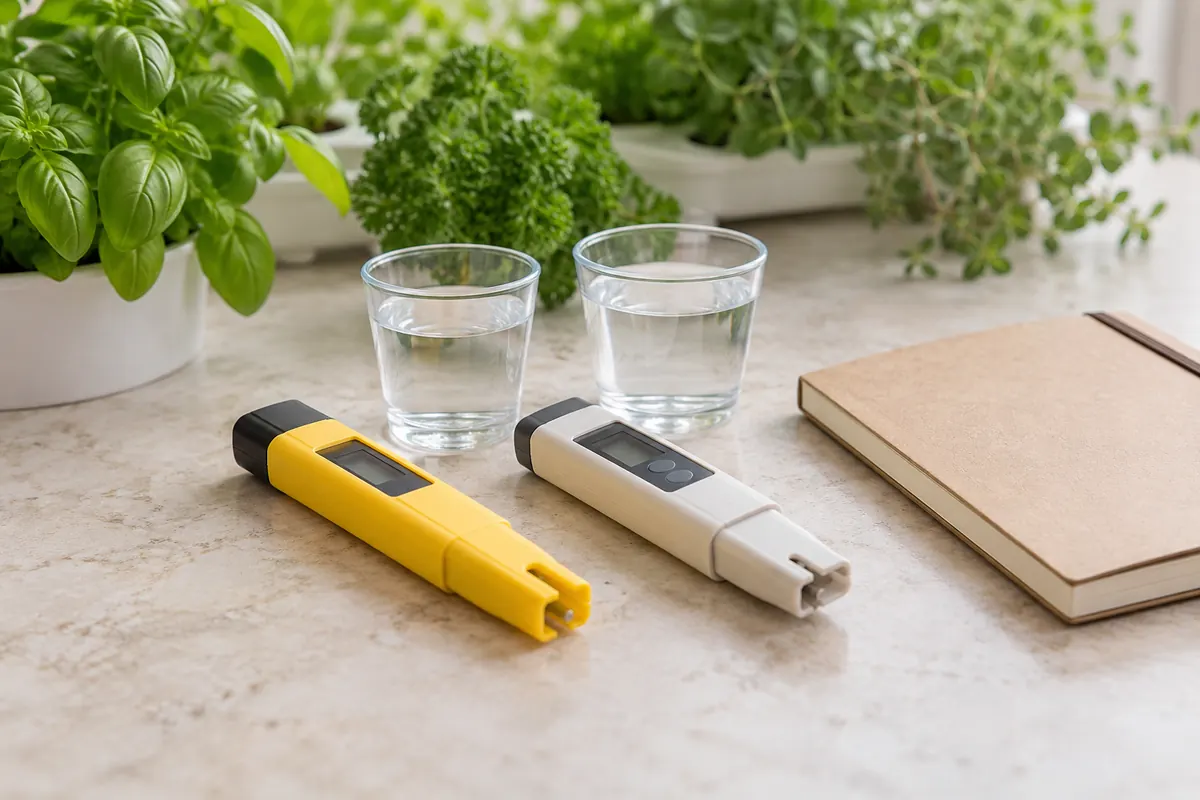
What pH tells you
pH describes how acidic or basic a solution is. It affects nutrient availability. The right target depends on the crop and growing guidance; there is no single number that every plant and system should share. Check a calibrated meter and the relevant recommendations before using an adjustment product.
Further reading: Oklahoma State University Extension · Electrical conductivity and pH guide
What EC does—and does not—tell you
Electrical conductivity, or EC, is an indicator of dissolved ions. A higher reading generally means more dissolved salts, not a better-fed plant. A reading on target also cannot prove that every individual nutrient is balanced. Your source water contributes to the reading before fertilizer is added.
Further reading: University of Missouri Extension · Hydroponic nutrient solutions
Measure, mix and keep a record
Use nutrients intended for hydroponics and follow their preparation instructions. Measure the actual water volume rather than estimating from the planter’s appearance. Check the mixed solution, note pH and EC, and follow the recommended refill and replacement routine. Do not add concentrated fertilizer simply because the water level fell.
Further reading: Oklahoma State University Extension · Electrical conductivity and pH guide · University of Missouri Extension · Hydroponic nutrient solutions
Sources & further reading
Original GrowGrid explanations informed by university extension guidance. The linked guides describe different growing systems; they do not endorse GrowGrid products.

